
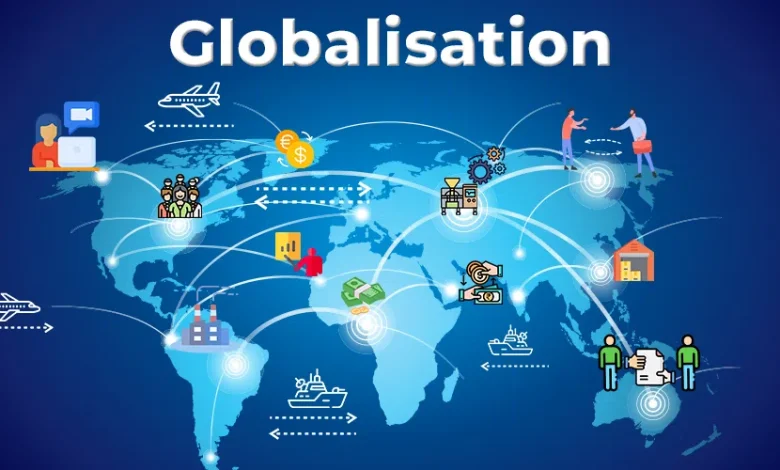
When you prepare for school exams in Bangladesh, social and economic topics are very common, and one of the most important among them is the globalisation paragraph. Globalisation means the process by which countries around the world become connected through trade, technology, communication, and cultural exchange. It has made the world smaller and more interdependent than ever before.
When you write a paragraph on globalisation, you learn how to explain complex ideas in a simple and organized way. It helps you understand how global changes affect your daily life, economy, education, and culture. From using the internet to buying foreign products, globalisation influences everything. Practicing this topic in different word limits will improve your writing skills and help you perform confidently in SSC and HSC exams.
Globalisation Paragraph of 100 Words
Globalisation is the process of increasing connection and interaction among countries through trade, communication, and technology. It has made the world more connected than ever before. When you write a paragraph on globalisation, you should explain how countries share ideas, goods, and services.
One of the main reasons for globalisation is the advancement of technology. The internet, mobile phones, and faster transportation systems have made communication easier. As a result, people can learn about different cultures and lifestyles.
Globalisation has many benefits. It helps countries grow economically and provides more job opportunities.
In conclusion, globalisation plays an important role in modern life. Practicing a paragraph on globalisation helps you understand this concept clearly and write effectively in exams.
Globalisation Paragraph of 150 Words
Globalisation refers to the process by which countries become interconnected through trade, communication, and cultural exchange. It has transformed the world into a global village. Writing a paragraph on globalisation helps you describe how this process affects different aspects of life.
The main causes of globalisation include technological advancement, international trade agreements, and improved transportation systems. The internet and digital communication have made it easier for people to connect across borders. Businesses can now operate globally, and goods can be transported quickly.
Globalisation has several advantages. It promotes economic growth by increasing trade and investment. It also creates job opportunities and allows countries to access new markets. Cultural exchange is another benefit, as people learn about different traditions and lifestyles.
However, globalisation also has some disadvantages. It can lead to the loss of local culture and increase inequality between rich and poor countries.
In conclusion, globalisation has both positive and negative effects. Practicing a paragraph on globalisation helps you express balanced ideas and perform well in exams.
Globalisation Paragraph of 200 Words
Globalisation is a powerful process that connects countries and people across the world. It involves the exchange of goods, services, ideas, and culture. In Bangladesh, globalisation has played a significant role in economic and social development. Writing a paragraph on globalisation allows you to explore these changes in detail.
Technology is one of the main drivers of globalisation. The internet, social media, and digital platforms have made communication faster and easier. People can now connect with others worldwide and access global information instantly. International trade has also increased, allowing countries to export and import goods more efficiently.
Globalisation has brought many benefits to Bangladesh. It has created job opportunities, especially in the garment industry, and increased foreign investment. Students can access online education and learn about global cultures. However, there are also challenges. Globalisation can threaten local traditions and increase economic inequality.
The impact of globalisation is both positive and negative. It has improved living standards but also created competition and cultural changes.
In conclusion, globalisation is an important part of modern life. Writing a paragraph on globalisation helps you understand its effects and present your ideas clearly in exams.
Globalisation Paragraph of 250 Words
Globalisation is the process of increasing interconnectedness among countries through trade, technology, and cultural exchange. It has transformed the world into a closely linked global community. For students in Bangladesh, understanding this concept is important, and writing a detailed paragraph on globalisation helps explain its impact effectively.
The history of globalisation dates back to early trade routes, but it has expanded rapidly in recent decades due to technological advancements. The internet, faster transportation, and multinational companies have played a major role in this process. Countries are now more dependent on each other for goods, services, and information.
In Bangladesh, globalisation has had a significant impact on the economy. The garment industry has grown due to international trade, providing employment to millions of people. Access to global markets has increased economic opportunities and improved living standards. Education has also benefited, as students can access online resources and learn from global platforms.
However, globalisation also has negative effects. It can lead to cultural erosion, where local traditions are replaced by foreign influences. Economic inequality may increase, as large companies dominate smaller businesses. Environmental issues can also arise due to increased industrial activities.
Despite these challenges, globalisation continues to shape the modern world. Governments and individuals must find ways to balance its benefits and drawbacks.
In conclusion, globalisation is a powerful force that influences every aspect of life. By practicing a paragraph on globalisation, you can improve your writing skills, understand global issues, and perform confidently in your academic exams.
Conclusion
In conclusion, preparing a strong globalisation paragraph is essential for students in Bangladesh, especially for SSC and HSC exams. It not only improves your writing skills but also helps you understand how the modern world is interconnected. When you regularly practice a paragraph on globalisation, you learn to organize your thoughts clearly, present balanced arguments, and use appropriate vocabulary.
This topic also increases your awareness of global economic, social, and cultural changes. By practicing different word limits, you can become more confident and efficient in exams. Ultimately, mastering this topic will help you achieve better academic results and develop a broader understanding of the world around you.
FAQs
Q1: What is globalisation?
A: Globalisation is the process of connecting countries through trade, communication, and culture. It allows people, goods, and ideas to move easily across borders, making the world more interconnected and dependent.
Q2: What are the advantages of globalisation?
A: Globalisation promotes economic growth, creates job opportunities, and encourages cultural exchange. It helps countries access new markets, improve technology, and enhance living standards through international cooperation and development.
Q3: How does globalisation affect Bangladesh?
A: Globalisation has boosted Bangladesh’s economy through industries like garments, increased trade, and access to global markets. It also improves education and communication but may create challenges like inequality and cultural changes.
Q4: What should you include in a paragraph on globalisation?
A: You should include definition, causes, effects, advantages, disadvantages, and a conclusion. Use simple language, maintain logical flow, and focus on relevant points to make your paragraph clear and effective.
Q5: What are the disadvantages of globalisation?
A: Globalisation can cause cultural loss, economic inequality, and environmental problems. Small businesses may struggle against large companies, and developing countries may face challenges competing in the global market.


